Introduction
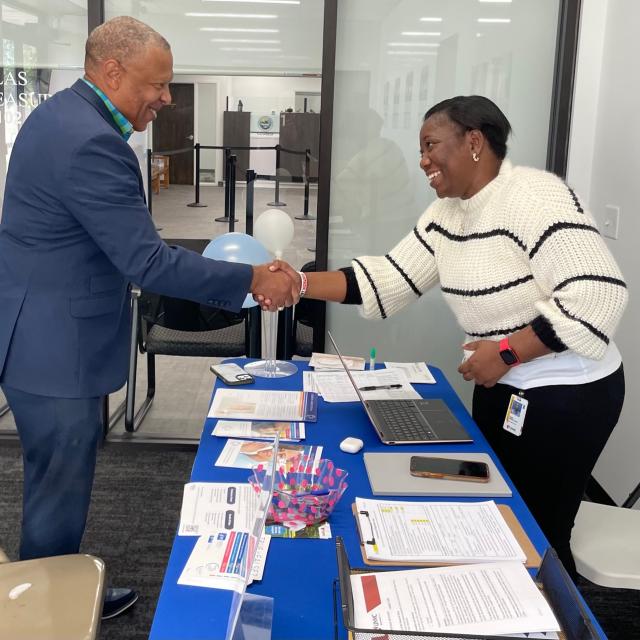
While most people don’t think about preventive health while waiting at the Department of Motor Vehicles (DMV), one of our grantees saw an opportunity to meet people where they already are. Dr. Jungyoon Kim, director of the Black Equity, Access, and Testing for Cancer (BEAT Cancer) study, partnered with the DMV, the Drivers' Licensing Office, and the County Treasurer's Office to distribute colorectal cancer (CRC) home screening kits at one of the community's busiest public service locations. This partnership allowed the project team to reach individuals with limited access to preventive healthcare. Trained community health workers greeted visitors, answered questions, and offered screening kits to eligible adults interested in participating. The project aimed to improve access to colorectal cancer screening among African Americans, who continue to face inequities in cancer outcomes, while also testing whether in-person distribution at trusted community locations could be an effective and cost-conscious approach. Through this initiative, the DMV became an unexpected but promising example for leveraging community–research partnerships to improve health equity and access.
How Partnerships Evolve
The BEAT Cancer partnership started with a conversation in early 2021 with Dr. Kim’s team at the University of Nebraska Medical Center and Mr. John Ewing, a trusted community leader and strong advocate for health in the Black community. As they discussed ways to improve colorectal cancer screening, he offered a simple but transformative idea: “JY, why don’t we give out screening kits at the DMV and the county treasurer’s office?”
That moment shifted the direction of the project. The Douglas County Treasurer/DMV—a place most community members visit at some point—became a potential access point for preventive care and cancer screening. From there, the partnership expanded to include the Great Plains Colon Cancer Task Force, the Nebraska Department of Health and Human Services, and Charles Drew Health Center, Inc. Together, they built a community-informed approach grounded in proven screening strategies and ongoing support to help people follow through with care.
Impacts
Across DMV and County Treasurer’s Office locations, the team connected with 6,338 community members, many of whom might not otherwise have been reached through traditional healthcare settings. Of those individuals, 519 were eligible and chose to take home a screening kit. More than half were Black men, a group that is less likely to access preventive care.
In total, 171 participants returned their kits, resulting in 30 abnormal results that required follow-up care. Clinicians also identified and removed polyps and adenomas in 14 participants, potentially stopping cancer before it could develop. Stories like those of Quintin Griffin and Juanita Thomas highlight the power of early detection and demonstrate how community spaces can serve as important pathways to lifesaving care.
How Partnerships Build & Expand
The partnership’s impact also extended beyond the DMV. Through on-site recruitment, the project sparked interest among local churches, creating new opportunities for outreach through church-to-church relationships and a pastor’s network exploring similar health screenings across congregations and denominations. At the same time, partners expanded access in other community settings, including by adding CRC screening kits to community health vending machines so people could access screening on their own time. More broadly, the BEAT Cancer model shows how cross-sector partnerships can bring preventive care into trusted, everyday spaces, including but not limited to barbershops and salons, libraries, religious institutions, and other high-traffic community locations.
Moving this work forward means thinking strategically about sustainable funding and partnerships with state and local health departments and nonprofits to keep these community health programs going. By embedding health outreach into places people already visit, these partnerships can make screening more accessible, familiar, and community-centered.
Note:
A Community Action Board was influential in ensuring community representation, engagement, and the development of impactful solutions during the screening program implementation. We will delve into the dynamics of the BEAT Cancer study Community Action Board in an upcoming blog post.