Evidence for Action (E4A) funds research evaluating the population health, wellbeing, and racial equity impacts of programs, policies, and practices. What We're Learning is a repository of media pieces, research articles, presentations, reports, and other materials highlighting E4A supported research and findings. Sort by topic or resource type.

Handgun waiting periods, firearm permits, prohibition of firearm possession by a person convicted of a violent misdemeanor, and firearm relinquishment programs led to a lower percentage of in-state gun ownership and a lower chance that recovered guns were from an in-state source, suggesting guns tend to move from states with fewer restrictions into states with more restrictions.
Published Research resource

Hundreds of lives could be saved each year if all states required people under domestic violence restraining orders to relinquish their firearms and instituted may issue laws, giving authorities some level of discretion over the issuance of concealed carry permits.
Briefs, Reports, and Infographics resource
State laws that prohibit people subject to a domestic abuse related restraining from owning guns and requiring them to relinquish any firearms in their possessions save lives. Such laws led to reductions in total and firearm-related intimate partner violence homicide rates.
Published Research resource
States restricting possession of large capacity ammunition magazines also have lower numbers of mass shootings.
Popular Press resource
Speakers discuss their research on the relationship between state domestic violence-related firearm laws and rates of intimate partner homicide across all 50 states from 1991-2015.
Videos, Podcasts, & Webinars resource
States with laws requiring people that are subject to domestic violence restraining orders relinquish their firearms have lower rates of intimate partner homicide.
Popular Press resource
May-issue laws, those in which authorities have some discretion in whether or not to issue concealed carry permits, may prevent homicide deaths.
Published Research resource
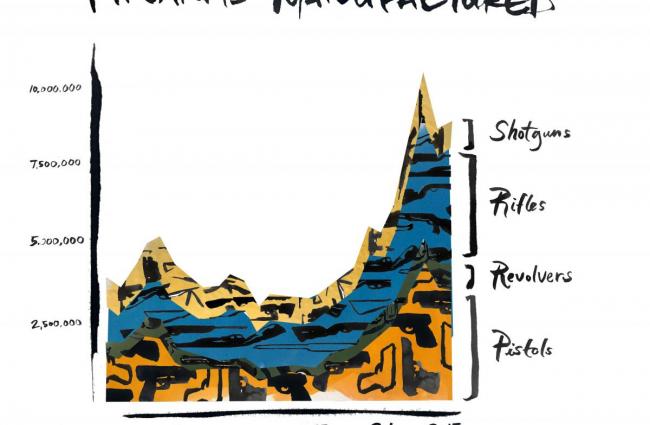
Firearm manufacturers are producing more-lethal weapons, with higher numbers of gun purchases and crime gun traces.
Published Research resource

The State Firearm Laws project aims to provide researchers with the data necessary to evaluate the effectiveness of various firearm laws. The website features a database of all law provisions by year and state, a codebook, and information on the methodology used to develop the database.
Popular Press resource
A recently created database tracks state-level firearm-related laws from 1991 to 2016. The database shows that while the overall number of laws has increased during that time, the number of laws varies a great deal from state to state, with some states adding a large number of laws over the year and other states not adding a single one.
Published Research resource
Access to firearms varies from state to state. The State Firearm Laws Database includes information on the laws in place in each of the 50 states and DC and the website highlights some of the things you can learn from the database.
Commentaries resource
Videos, Podcasts, & Webinars resource