Introducing E4A's Final Grantees

We're excited to welcome our seven final E4A grantees, representing nearly $3 million in funding to support community-led research advancing racial and Indigenous health justice. Reflecting E4A's commitment to research conducted in service to communities, this funding opportunity required community-based (CBO) leadership, social contracts, and shared decision-making structures that help rebalance historical inequities in research power and practice.
These grants exemplify what it means to center community knowledge, leadership, and power, with each team advancing research grounded in community priorities, strengths, and lived experience. Their work uplifts upstream, action-oriented solutions to disrupt the negative impacts of structural racism and settler colonialism, while modeling research approaches that prioritize transparency, accountability, and trust.
Collectively, these grants are meeting the current moment by demonstrating how prioritizing communities in the research process can reclaim research in service of community benefit and serve as an antidote to attacks on science and equity.

What We're Funding

| Kākua Ho'olaupa'i: Advancing Birth Equity through a Culturally Grounded Native Hawaiian Birthing Movement - Examining cultural agency as a protective factor for pregnant Native Hawaiian and Pacific Islander (NHPI) women navigating Western medical systems. |

| Pacific-Centered Maternal Health Surveillance System: Rebuilding Perinatal Data Systems for Equity, Inclusion, and Sovereignty - Developing an alternative maternal health data collection system that has representation for Hawai'i's marginalized populations. |

| The THRIVE II Study: Developing a Novel Toolkit to Advance Perinatal Health Equity among Bisexual Women of Color - Developing a toolkit to address the lack of intersectional, obstetric research that interrogares racial health inequity among LGBTQ+ women of color. |
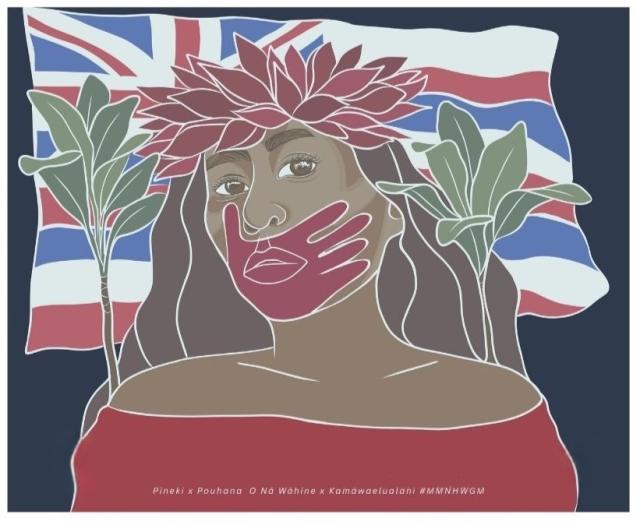
| Missing and Murdered Native Hawaiian Women, Girls, Māhū - Addressing gender-based violence experienced by Native Hawaiian women, girls, māhū through a Kānaka ʻŌiwi-led coalition to generate accurate, community-governed data that advances healing, justice, and Indigenous data sovereignty. |
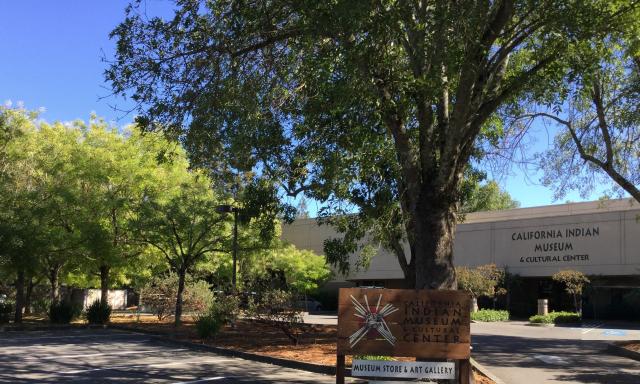
| Voices from the Margins: California Indian Health Identity Framework Project - Bridging the gap in addressing health disparities arising from narrow colonial definitions tied to federal definitions of California Indian identity. - |

| Institutionalizing African Epistemologies in U.S. Health Research: A Pilot Study of a Culturally Grounded Framework - Addressing the long history of erasure of African immigrant identities and lived experience to reshape how health research is conducted, governed, and evaluated in the United States. |

| Beyond Access: A Research Initiative Linking State Disability Insurance Interventions to Maternal and Infant Health Outcomes - Examining how integrating clinical and legal support through a Medical-Legal Partnership model affects access to State Disability Insurance (SDI) among pregnant Latin@ and Indigenous agricultural workers. |
What We're Reading

Focusing on Race and Racism is Critical to Advancing Health Justice responds to an earlier commentary that suggested health disparities research had become too narrowly focused on race and should be more inclusive of multiple social characteristics. Co-authored by David H. Chae, E4A Director Amani Nuru-Jeter, and Paula Braveman, their response contends that you can broaden health disparities research to include class, geography, disability, etc., but you cannot effectively address those inequities without also directly confronting racism and the sytems that produce racial inequities.
What We're Learning

| During a recent audit of our What We're Learning repository, we added a range of new communication research articles, reports, and other resources from our grantees' research and findings. Topics include Housing and Neighborhoods, Education and Early Childhood Care and Development, Reproductive Health, Crime and Policing, Immigration, and Gun Violence. |
Latest E4A Blog Posts
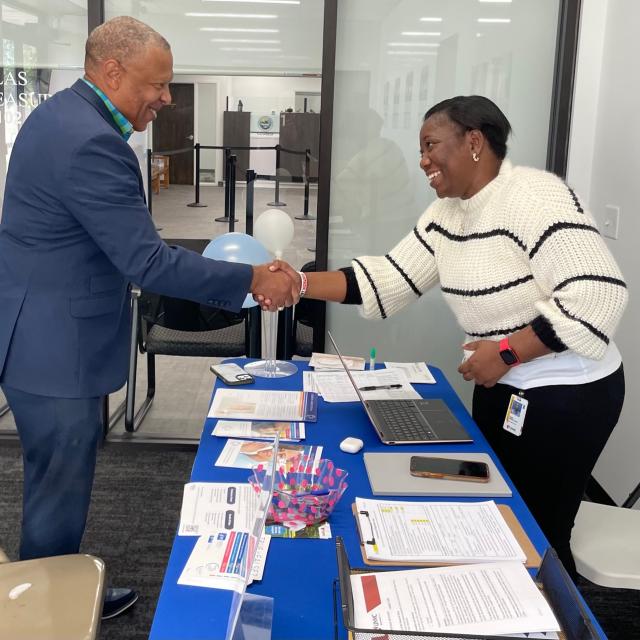
Mr. John Ewing and Dr. Grace Mabiala-Maye shake hands at a distribution booth in the Douglas County Treasurer Office
Using a Cross-Sectoral Partnership to Improve Health Equity
Other News & Opportunities
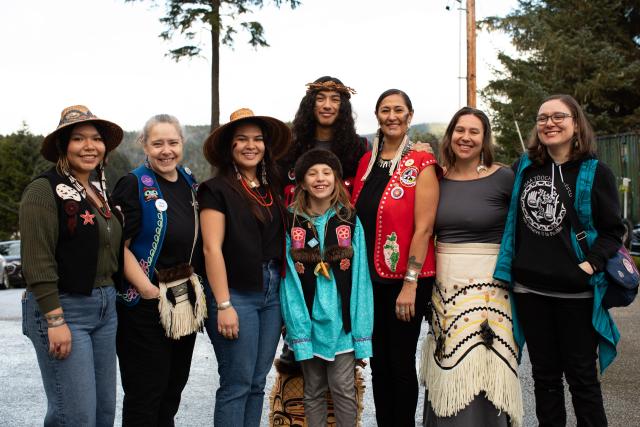
Attendees of a Ku.eģex' (Tlingit ceremony) held in Angoon in October 2024, during which the U.S. Navy issued a formal apology for the bombardment of the Angoon community in 1882. Photo: Brian Adams for RWJF |
Answering the Call for a Health, Inclusive Democracy
"A call for justice is ringing across this nation from every neighborhood and community. A call for fairness. A call for those with power, privilege, and resources to put them on the line for the betterment of everyone. Who will answer?" In his annual Letter to the Field, Rich Besser, President and CEO of the Robert Wood Johnson Foundation (RWJF), answers the call for a healthy, inclusive democracy amid calculated attacks on democracy, communities, and our health. He reflects on what a healthy, inclusive democracy that serves everyone looks like. "...we hear the call. And we will answer."
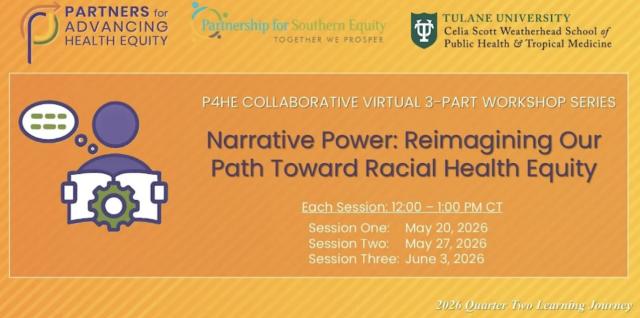
Free workshop series! - Narrative Power: Reimagining Our Path Toward Racial Health Equity
a In collaboration with Partners for Advancing Health Equity and Tulane University Celia Scott Weatherhead School of Public Health and Tropical Medicine, this workshop series is inspired by the Partnership for Southern Equity's ongoing work through the Community-Informed Research for Change, Learning, and Equity (CIRCLE) initiative, which is helping build power across the U.S. South by bringing together the voices, insights, and lived expertise of researchers practitioners, and community-based leaders.
Although the date for the first session has passed, you can still sign up the next two! Across the sessions, participants will be invited to reflect on imagination as a catalyst for change, engage in dialogue about how narratives influence health research and practice, and consider how stronger, community-centered narrative projects can be created and sustained across the South.
Have an oportunity you'd like to broadcast?
Email evidenceforaction@ucsf.edu and we'll be happy to amplify opportunites that align with E4A. |

|